Best of Machine LearningJanuary 2026

  1. 1
    Article
    Avatar of decuberssDecube·14w

    What is Context Engineering?

    Context Engineering is the practice of designing and operationalizing business meaning, data lineage, quality signals, and policy constraints so AI systems can reliably understand and act on enterprise data. Unlike prompt engineering (which focuses on how questions are asked), Context Engineering establishes what AI systems know before questions are posed. It comprises four core components: semantic context (business definitions), lineage context (data flow and dependencies), operational context (quality and reliability signals), and policy context (compliance and usage constraints). This foundation is critical for Agentic AI systems that reason and act autonomously, enabling them to assess risk correctly, explain decisions, and know when to escalate. Enterprises should prepare by inventorying critical data, unifying metadata into a single context layer, and exposing context through APIs for AI agent consumption.
  2. 2
    Article
    Avatar of dailydoseofdsDaily Dose of Data Science | Avi Chawla | Substack·11w

    Phases of ML Modeling

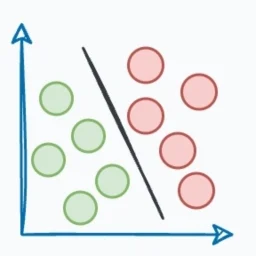
    ML systems should evolve through four distinct phases rather than jumping straight to complex models. Start with simple heuristics and rules (Phase 1), then move to basic ML models like logistic regression (Phase 2), optimize through feature engineering and hyperparameter tuning (Phase 3), and only adopt complex models like deep neural networks when simpler approaches are exhausted (Phase 4). This staged approach reduces risk, improves debuggability, and ensures each phase's best model becomes the baseline for the next, encouraging incremental progress and evidence-driven decision-making.

  3. 3
    Article
    Avatar of programmingdigestProgramming Digest·12w

    I got paid minimum wage to solve an impossible problem.

    A computer science student turned a supermarket floor sweeping job into an optimization problem using simulated annealing and the traveling salesman problem. The initial solution minimized distance but created an impractical path with excessive turns. Adding a turn penalty to the cost function produced a more realistic, human-friendly route. This experiment illustrates how optimizing for easily measurable metrics (distance, engagement, profit) instead of actual goals (usability, wellbeing, sustainability) leads to technically correct but practically useless or harmful outcomes in algorithms, social media, AI, and business.

  4. 4
    Article
    Avatar of do_communityDigitalOcean Community·15w

    Olmo 3: Fully Open-Source LLM from AI2 (Models, Data, & Code)

    Olmo 3 is Allen AI's fully open-source large language model available in 7B and 32B parameter versions. The release includes complete access to models, training datasets (Dolma 3 with 9.3 trillion tokens), code, and training logs. The model uses a three-stage training pipeline: pretraining on Dolma 3 Mix, mid-training on Dolma 3 Dolmino for skill enhancement, and long-context extension on Dolma 3 Longmino. Post-training uses the Dolci suite with SFT, DPO, and RLVR techniques. The 32B model employs grouped query attention while the 7B uses multi-head attention. OlmoTrace enables tracing text back to training sources for auditing and contamination detection.

  5. 5
    Article
    Avatar of roadmaproadmap.sh·11w

    MLOps Roadmap has been updated!

    The roadmap.sh MLOps roadmap has been updated for 2026, providing a step-by-step guide for learning and mastering MLOps practices. The updated resource offers a structured learning path for those looking to develop skills in machine learning operations.

  6. 6
    Article
    Avatar of huggingfaceHugging Face·11w

    Architectural Choices in China's Open-Source AI Ecosystem: Building Beyond DeepSeek

    China's open-source AI ecosystem has shifted toward Mixture-of-Experts (MoE) architectures as the default choice, prioritizing cost-performance balance over maximum capability. Leading organizations expanded beyond text models into multimodal domains (video, audio, 3D), with growing emphasis on small models (0.5B-30B parameters) for practical deployment. Apache 2.0 became the standard license, reducing friction for production use. A significant strategic shift emerged toward hardware-first development, with models increasingly optimized for domestic Chinese chips (Huawei Ascend, Cambricon, Baidu Kunlun) in both inference and training. Companies are open-sourcing production-grade serving systems and infrastructure, moving competition from isolated model performance to full-stack ecosystem design.

  7. 7
    Article
    Avatar of bytebytegoByteByteGo·13w

    How Lyft Built an ML Platform That Serves Millions of Predictions Per Second

    Lyft built LyftLearn Serving, an ML platform handling millions of predictions per second using a microservices architecture. Instead of a shared monolithic system, they generate independent microservices for each team via configuration templates. The platform separates data plane concerns (runtime performance, inference execution) from control plane concerns (deployment, versioning, testing). Key features include automated model self-tests, flexible library support (TensorFlow, PyTorch), and dual interfaces for engineers and data scientists. The architecture uses Flask/Gunicorn for HTTP serving, Kubernetes for orchestration, and Envoy for load balancing. Over 40 teams migrated from the legacy system, achieving team autonomy while maintaining platform consistency.

  8. 8
    Article
    Avatar of rhdevRed Hat Developer·14w

    The state of open source AI models in 2025

    2025 saw significant growth in open source AI models, particularly from Chinese labs like DeepSeek, Qwen, and Moonshot AI's Kimi K2. These models now rival proprietary options like ChatGPT while offering cost control and on-premises deployment. The landscape includes model families of various sizes (from 0.5B to 1T parameters) for different use cases: Qwen for versatility, Kimi K2 for agentic workflows and coding, OpenAI's gpt-oss for tool calling, and small language models for edge devices. Enterprise adoption is growing in regulated sectors requiring data sovereignty. Tools like Ollama, RamaLama, and vLLM make deployment accessible, from local hardware to production Kubernetes environments.

  9. 9
    Article
    Avatar of profleadproflead·15w

    AI News for Devs #7: Manus, Gemini 3 Flash, OpenAI Launches Grove & More

    Meta acquired AI startup Manus for $2 billion to enhance its AI agent capabilities. Stack Overflow's 2025 survey reveals 80% of developers use AI tools, though trust has declined from 40% to 29%. Google launched Gemini 3 Flash globally with fast query responses and deepfake detection. OpenAI opened applications for Grove, a new developer support program. Google predicts AI agents will dominate 2026, offering developers opportunities for personalized experiences.

  10. 10
    Article
    Avatar of huggingfaceHugging Face·12w

    Differential Transformer V2

    Differential Transformer V2 introduces a redesigned attention mechanism that doubles query heads while maintaining key-value heads, eliminating the need for custom kernels and achieving faster decoding speeds. The architecture removes per-head RMSNorm to improve training stability, introduces token-level and head-level lambda projections to overcome softmax constraints, and eliminates attention sinks. Production-scale experiments on trillion-token datasets show 0.02-0.03 lower language modeling loss, reduced gradient spikes under large learning rates, and decreased activation outliers compared to standard Transformers, while saving approximately 25% of attention module parameters.

  11. 11
    Article
    Avatar of c0de517ec0de517e's weblore·12w

    World models hallucinations.

    Real-time rendering and generative AI video models represent opposite extremes in a design continuum. Traditional game engines prioritize efficiency and performance through handcrafted content and first-principles algorithms, while AI world models sacrifice compute efficiency for content creation speed through learned hallucinations. The future likely lies somewhere between these extremes, combining interpretable world state and discrete object representation from traditional engines with AI-driven generation and simulation. This hybrid approach could enable new forms of interactive content creation that balance control, efficiency, and automation differently than current game engines.

  12. 12
    Article
    Avatar of gcpGoogle Cloud·11w

    Introducing Google Cloud Vertex AI Extensions for .NET

    Google Cloud announces the Google.Cloud.VertexAI.Extensions library, enabling .NET developers to integrate Gemini models on Vertex AI through Microsoft.Extensions.AI abstractions. The library provides a unified API for multi-provider AI applications, supporting chat, embeddings, and image generation. It complements the existing Google Gen AI .NET SDK by offering flexibility for developers who need to work with multiple AI providers (Google, OpenAI, Azure) while maintaining consistent code patterns. The library is currently in beta and includes code samples for common use cases.

  13. 13
    Article
    Avatar of cncfCNCF·11w

    Introducing Kthena: LLM inference for the cloud native era

    Kthena is a new open-source sub-project of Volcano designed for LLM inference orchestration on Kubernetes. It addresses production challenges like low GPU/NPU utilization, latency-throughput tradeoffs, and multi-model management through intelligent routing, KV Cache-aware scheduling, and Prefill-Decode disaggregation. The system includes a high-performance router and controller manager that support topology-aware scheduling, gang scheduling, autoscaling, and multiple inference engines (vLLM, SGLang, Triton). Benchmarks show 2.73x throughput improvement and 73.5% TTFT reduction compared to random routing. Backed by Huawei Cloud, China Telecom, DaoCloud, and other industry partners.

  14. 14
    Article
    Avatar of sebastianraschkaSebastian Raschka·12w

    Categories of Inference-Time Scaling for Improved LLM Reasoning

    Inference-time scaling improves LLM answer quality by allocating more compute during text generation rather than training. The article categorizes different approaches including chain-of-thought prompting, self-consistency, best-of-N ranking, rejection sampling, self-refinement, and search over solution paths. Major LLM providers use these techniques, which can boost model accuracy significantly without changing model weights. The piece draws from research for a book chapter that improved base model accuracy from 15% to 52%.

  15. 15
    Article
    Avatar of hnHacker News·14w

    LMArena is a cancer on AI

    LMArena, a popular AI model leaderboard, is fundamentally flawed because it relies on casual internet users who prioritize superficial qualities like formatting, length, and emojis over factual accuracy. Analysis shows 52% of votes were questionable, with users consistently choosing confident-looking but incorrect answers over accurate ones. The system rewards models that game human attention spans rather than those that provide truthful responses, creating perverse incentives that push the entire AI industry toward optimizing for appearance over substance. This structural problem stems from using unpaid, unvetted volunteers with no quality control, making the leaderboard's influence on model development actively harmful to building reliable AI systems.

  16. 16
    Video
    Avatar of fknightForrestKnight·12w

    Ben Affleck actually knows AI

    Ben Affleck discusses AI limitations in creative work, arguing that large language models produce mediocre output by design since they trend toward average results. He views AI as a useful tool for specific tasks rather than a replacement for human creativity, comparing it to visual effects in filmmaking. He critiques the hype around AI capabilities, suggesting inflated claims are driven by companies justifying massive infrastructure investments, while noting that improvements are plateauing and becoming exponentially more expensive with diminishing returns.

  17. 17
    Video
    Avatar of bycloudbycloud·13w

    The New China AI Trifecta

    Three Chinese AI labs—Moonshot AI, ZAI (Zhipu AI), and MiniMax—have rapidly emerged as leaders in open-source LLM development, challenging closed-source models from OpenAI and Anthropic. Moonshot AI pioneered quantization-aware training with Kimi K2 Thinking, achieving state-of-the-art performance while optimizing for real-world inference. ZAI's GLM-4.7 model focuses on agentic capabilities and practical tool use, positioning itself as a cheaper alternative to Claude at $3/month. MiniMax pivoted from linear attention to standard GQA, topping SWE-bench among open-source models with their M2 release. Unlike research-focused labs like DeepSeek, this trifecta emphasizes application-driven development, targeting coding agents, tool use, and long-context capabilities with conservative but practical architectures.

  18. 18
    Article
    Avatar of huggingfaceHugging Face·14w

    Scaling Real-Time Voice Agents with Cache-Aware Streaming ASR

    NVIDIA introduces Nemotron Speech ASR, an open model that uses cache-aware streaming architecture to process real-time voice interactions. Unlike traditional buffered inference systems that repeatedly reprocess overlapping audio windows, this approach maintains an internal cache of encoder representations and processes each audio frame exactly once. The model achieves 3x higher efficiency, supports 560 concurrent streams on H100 GPUs, maintains stable latency under load, and delivers 24ms median time-to-final transcription. Real-world validation from Daily and Modal demonstrates zero latency drift at scale, enabling natural conversational agents with sub-900ms voice-to-voice loops.

  19. 19
    Article
    Avatar of dailydoseofdsDaily Dose of Data Science | Avi Chawla | Substack·11w

    Build Agents That Can Learn Like Humans

    ART (Agent Reinforcement Trainer) is an open-source framework that simplifies reinforcement learning for LLMs by eliminating manual reward function engineering. It uses GRPO (Group Relative Policy Optimization) where agents attempt tasks multiple times, an LLM judge compares attempts, and the model learns from relative performance. Unlike traditional RL frameworks limited to simple chatbot interactions, ART supports multi-turn conversations, tool calls, and integrates with LangGraph, CrewAI, and ADK. It combines vLLM for model serving and Unsloth for GRPO training, enabling developers to fine-tune small open-source models to outperform larger closed-source alternatives on specific tasks.

  20. 20
    Article
    Avatar of phProduct Hunt·11w

    Invofox: The Document Parsing API for developers

    Invofox is a document parsing API that converts complex, real-world documents into structured data. It provides classification, validation, and extraction capabilities beyond basic OCR, designed to handle high-variance workflows and scale reliably in production environments.