Best of Deep LearningSeptember 2024

  1. 1
    Article
    Avatar of huggingfaceHugging Face·2y

    Fine-tuning LLMs to 1.58bit: extreme quantization made easy

    As large language models (LLMs) grow, reducing their computational and energy costs via quantization becomes crucial. BitNet, a new transformer architecture from Microsoft Research, drastically cuts computational costs by representing parameters with ternary values (-1, 0, 1) at 1.58 bits per parameter. The post details how existing models, like Llama3, can be fine-tuned using BitNet, achieving efficient performance while maintaining accuracy. The article also covers the implementation, optimization, and benchmarking of custom inference kernels, making LLMs more scalable and practical.

  2. 2
    Video
    Avatar of googledevelopersGoogle for Developers·2y

    Machine Learning Crash Course: Neural Networks Intro

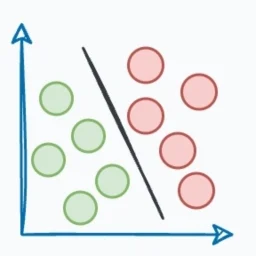
    This explains the transition from linear models to neural networks for modeling nonlinear relationships. It covers how traditional linear models use feature crosses and introduces the concept of hidden layers in neural networks. The key highlight is the use of activation functions, like ReLU, to introduce nonlinearity, enabling neural networks to approximate complex functions and automatically learn nonlinear relationships during training.

  3. 3
    Article
    Avatar of dailydoseofdsDaily Dose of Data Science | Avi Chawla | Substack·2y

    A Crash Course on Graph Neural Networks — Part 3

    Part 3 of the crash course on Graph Neural Networks covers advanced methods for graph learning and several feature engineering techniques, along with implementation details. The course aims to provide a beginner-friendly introduction to GNNs, highlighting their importance in big-tech ML applications and outlining the benefits and challenges of using graph data. Key topics include GNN tasks, data challenges, frameworks, advanced architectures, and practical demos.

  4. 4
    Article
    Avatar of do_communityDigitalOcean Community·2y

    PyTorch 101: Understanding Hooks

    Learn how to use hooks in PyTorch for debugging and visualization during the training process. This tutorial explains the concept and functionality of hooks, including both forward and backward hooks, and provides code examples to demonstrate their usage. It also discusses the intricacies of using hooks with tensors and nn.Module objects, cautioning about potential complications in complex networks.

  5. 5
    Article
    Avatar of hnHacker News·2y

    ictnlp/LLaMA-Omni: LLaMA-Omni is a low-latency and high-quality end-to-end speech interaction model built upon Llama-3.1-8B-Instruct, aiming to achieve speech capabilities at the GPT-4o level.

    LLaMA-Omni is a high-quality, low-latency, end-to-end speech interaction model built on Llama-3.1-8B-Instruct. It can generate both text and speech responses with latency as low as 226ms. The model was trained in less than 3 days using 4 GPUs. Setup involves cloning the repository, installing necessary packages, and downloading models from Huggingface and other sources. A Gradio web server can be used for interaction.

  6. 6
    Video
    Avatar of ibmtechnologyIBM Technology·2y

    The Power of Recurrent Neural Networks (RNN)

  7. 7
    Article
    Avatar of taiTowards AI·2y

    Transformer Architecture Part -1

    Transformers have revolutionized deep learning, excelling in language and vision tasks. The core architecture consists of identical encoder and decoder blocks, each featuring self-attention, feed-forward neural networks, add & norm layers, and residual connections. The process begins with tokenization, text vectorization, and positional encoding. Multi-head attention then contextualizes these vectors, followed by normalization and passing through feed-forward networks. The architecture ensures efficient handling of complex data patterns while maintaining consistent dimensionality for smooth training.

  8. 8
    Article
    Avatar of mlmMachine Learning Mastery·2y

    Interior Design with Stable Diffusion (7-day mini-course)

    Stable Diffusion is a deep learning model used to generate images based on text prompts. This 7-part mini-course covers setting up Stable Diffusion, using prompts to guide image generation, experimenting with different parameters, and leveraging extensions like ControlNet and LoRA to refine results. It is designed for those who are interested in using generative AI models without needing deep technical knowledge. Each lesson includes practical tasks to help solidify the concepts.

  9. 9
    Article
    Avatar of dailydoseofdsDaily Dose of Data Science | Avi Chawla | Substack·2y

    Deep Learning Models Can Learn Non-Existing Patterns

    Deep learning models can sometimes learn non-existing patterns, especially when data is not properly shuffled during training. This post illustrates an example where a classification neural network failed to converge due to label-ordered data but performed well when the data was shuffled. Shuffling helps in mini-batch gradient descent by ensuring that each mini-batch contains a balanced representation of classes. Be mindful of this and other potential pitfalls to improve model generalization and performance.

  10. 10
    Article
    Avatar of do_communityDigitalOcean Community·2y

    How to train and use a custom YOLOv7 model

    YOLOv7 is the latest iteration of the YOLO object detection model, offering significant improvements over previous versions due to enhancements like model re-parameterization, E-ELAN techniques, and compound scaling. The tutorial covers the theoretical background, practical steps for training a custom YOLOv7 model, and a detailed coding demo using NBA game footage to identify the ball handler. Key steps include dataset preparation, labeling using RoboFlow, model training, and performance evaluation.

  11. 11
    Article
    Avatar of communityCommunity Picks·2y

    BART Model for Text Summarization

    BART (Bidirectional and Auto-Regressive Transformers) is a pre-training method combining the strengths of BERT and GPT models. It's designed as a denoising autoencoder useful for various NLP tasks, especially text summarization. BART follows a sequence-to-sequence paradigm, excelling in both comprehension and fine-tuned text generation tasks. HuggingFace provides easy access to pre-trained BART models for text summarization.

  12. 12
    Article
    Avatar of communityCommunity Picks·2y

    Humble Tech Book Bundle: Software Architecture 2024 by O'Reilly

    Pay what you want to gain mastery in machine learning and AI with a set of books from No Starch Press, including titles such as *Deep Learning*, *Real World Python*, and *Practical Deep Learning*. This bundle offers 19 books valued at $761, and a portion of the proceeds supports the Electronic Frontier Foundation.

  13. 13
    Article
    Avatar of pytorchPyTorch·2y

    CUDA-Free Inference for LLMs

    The post discusses achieving FP16 inference with popular LLM models like Meta’s Llama3-8B and IBM’s Granite-8B Code using 100% Triton Language, comparing its performance to CUDA-dominant workflows on Nvidia GPUs. Using Triton offers cross-GPU compatibility, higher abstraction, and faster kernel development. The post covers Triton-based kernel implementations, benchmarks showing up to 82% of CUDA performance, and future optimizations for better GPU utilization.

  14. 14
    Article
    Avatar of mlnewsMachine Learning News·2y

    LLaMA-Omni: A Novel AI Model Architecture Designed for Low-Latency and High-Quality Speech Interaction with LLMs

    LLaMA-Omni, developed by researchers from the University of Chinese Academy of Sciences, is a novel AI model architecture designed for low-latency, high-quality speech interaction with large language models (LLMs). It integrates a speech encoder, speech adaptor, LLM, and streaming speech decoder to enable seamless speech-to-speech communication, bypassing intermediate text transcription. The model’s innovative design and the specialized InstructS2S-200K dataset allow it to outperform previous models in both content and style, achieving a remarkably low response latency of 226ms. Its efficient training process makes it a leading solution for real-time speech-based interactions.

  15. 15
    Article
    Avatar of gopenaiGoPenAI·2y

    Transformer from Scratch in TF Part 2: Encoder

    This post provides a detailed, step-by-step explanation of the Transformer Encoder Block using TensorFlow, focusing on the Multi-Head Attention mechanism. It covers the creation of Queries, Keys, and Values, the Scaled Dot-Product Attention mechanism, and the addition of residual connections and Layer Normalization. The final component, the Feed-Forward Network (FFN), is also detailed. Code examples in TensorFlow are provided throughout to illustrate key concepts.

  16. 16
    Article
    Avatar of tdsTowards Data Science·2y

    The Evolution of Text to Video Models

    Text-to-video generation is significantly more complex than text-to-image, demanding understanding of object movement and temporal consistency. Modern video diffusion models, like VDM, Make-A-Video by Meta AI, Imagen Video, and SORA, tackle these challenges using strategies such as combining image-text and unlabelled video data, spatial and temporal layers, and latent diffusion. Large-scale datasets and computational advancements are expected to drive future innovations in this field.