Best of Computer VisionSeptember 2024

  1. 1
    Video
    Avatar of tiffintechTiff In Tech·2y

    Automating My Life With Python: Using Computer Vision to Choose The BEST Glasses For Me

    This post explores using Python and Cursor AI to develop a computer vision project to choose the best glasses based on facial features. It highlights the use of the NumPy and Pillow libraries for mathematical operations and image processing, respectively. Emphasis is placed on the fun and educational aspects of building projects with these tools, as well as the potential future demand for specialized developers in the age of AI coding tools.


  2. 2
    Video
    Avatar of googledevelopersGoogle for Developers·2y

    Machine Learning Crash Course: Neural Networks Backprop

    Neural networks utilize backpropagation to adjust the weights of nodes to improve accuracy in classification tasks. This method assigns blame to different nodes based on their contribution to the error, adjusting parameters more significantly when the error is high. Techniques like these are crucial for tasks such as image classification, although different neural network configurations might be required for specific types of problems.

  3. 3
    Video
    Avatar of youtubeYouTube·2y

    Football AI Tutorial: From Basics to Advanced Stats with Python

    This post provides a comprehensive tutorial on enhancing football AI analysis using Python. It covers detecting and tracking players, ball, and referees on the pitch, using Sly embeddings to divide players into teams, and employing keypoint detection and homography to create advanced visualizations like radar views and Voronoi diagrams. The guide is approachable for those with basic Python knowledge, with models and data publicly available for ease of replication. The tutorial uses tools like YOLO V8, Google Colab, and the Roboflow platform for model training and deployment.

  4. 4
    Article
    Avatar of dailydoseofdsDaily Dose of Data Science | Avi Chawla | Substack·2y

    Implementing a Siamese Network

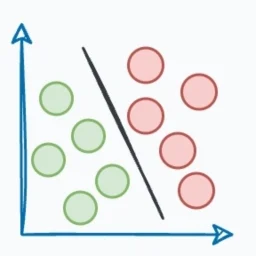
    This guide provides a beginner-friendly implementation of a Siamese network using the MNIST dataset. It covers dataset creation, defining the network, applying contrastive loss, and training the model. The post includes detailed steps for creating image pairs, defining a custom dataset class, and testing the model's performance. Key takeaway: Siamese networks require labeled data, but methods to handle unlabeled data are in discussion.

  5. 5
    Video
    Avatar of twoninutepapersTwo Minute Papers·2y

    NVIDIA’s New AI Is Really Good At Moving Rabbits!

    NVIDIA's new AI technique excels at moving objects within photos while maintaining visual consistency. Traditional methods struggled with understanding and preserving relationships between objects and their surroundings, but this advanced technique accurately updates reflections and shadows. Although not perfect, it significantly outperforms previous methods, allowing for object relocation with less artifacting and leakage. Future improvements might include real-time updates and better handling of rotations and resizing.

  6. 6
    Article
    Avatar of deepgramDeepgram·2y

    High-Level Explanations: Agentic AI Deep-Dive

    Agentic AI is an advanced type of AI system designed to act autonomously, capable of performing tasks, making decisions, and learning from feedback without human intervention. This technology is utilized in various fields, including space exploration, finance, autonomous vehicles, and healthcare. While providing significant benefits in terms of efficiency and reliability, agentic AI also presents ethical challenges that require careful consideration and collaborative regulation.

  7. 7
    Article
    Avatar of hnHacker News·2y

    C-Naoki/image-stitcher: This is a python implementation for stitching images.

    A Python implementation for stitching images by automatically searching for the overlap region. The provided code uses functions to combine two images based on their overlap and visualizes the results. Detailed results and an example are available in a Jupyter notebook (tutorial.ipynb).