Agent Memory: Why Your AI Has Amnesia and How to Fix It
This title could be clearer and more informative.Try out Clickbait Shieldfor free (5 uses left this month).
AI agents suffer from amnesia because they rely solely on context windows, which are volatile, expensive, and stateless. The solution is persistent agent memory built on four types drawn from cognitive science: working, procedural, semantic, and episodic. Production memory systems combine vector stores for semantic retrieval, knowledge graphs for relationship-aware queries, and relational databases for structured data with ACID guarantees. Key frameworks include LangChain/LangMem, Letta (MemGPT), Zep/Graphiti, and Mem0. At enterprise scale, memory becomes a database problem requiring row-level security, multi-tenancy, compliance with GDPR and the EU AI Act, and atomic transactions across multiple data types. Practical code examples show how to implement a vector-backed memory store using LangChain and Oracle Database via the langchain-oracledb package. Future trends include sleep-time computation for offline memory consolidation and the shift from RAG to full contextual memory systems.
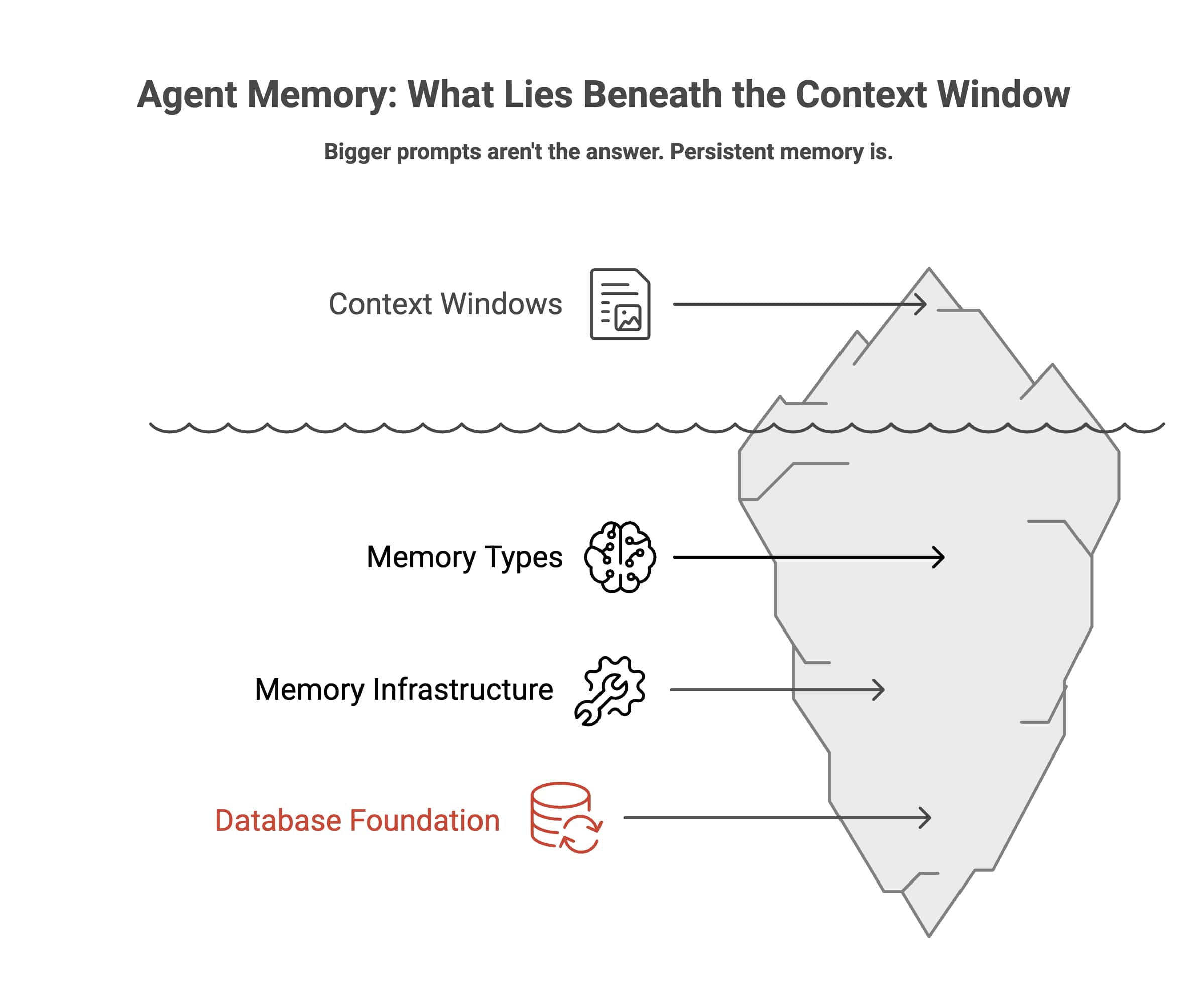
Table of contents
Key TakeawaysWhat Is Agent Memory and Why Does Your AI Agent Need It?Why Bigger Context Windows Aren’t the AnswerThe Concept: A Mental Model for Agent MemoryThe Landscape: Frameworks and Open-Source LibrariesThe Deep Dive: How Agent Memory Actually WorksThe four memory operationsThe Enterprise Reality: What Changes at ScaleThe Implementation: Building Agent Memory with LangChain and OracleThe Perspective: Where This Is HeadingFrequently Asked QuestionsSort: