5 Levels Of AI Agents (Updated)
This title could be clearer and more informative.Try out Clickbait Shieldfor free (5 uses left this month).
Autonomous AI agents can independently perform complex tasks by leveraging advanced language models. They manage states and transitions, breaking down ambiguous questions into sub-steps processed iteratively. These agents differ from traditional RPA methods through their flexibility, dynamic learning, real-time decision-making, and ability to handle unstructured data. Key features include latency and cost management, tool integration, and the use of Human-in-the-Loop (HITL) for complex tasks.
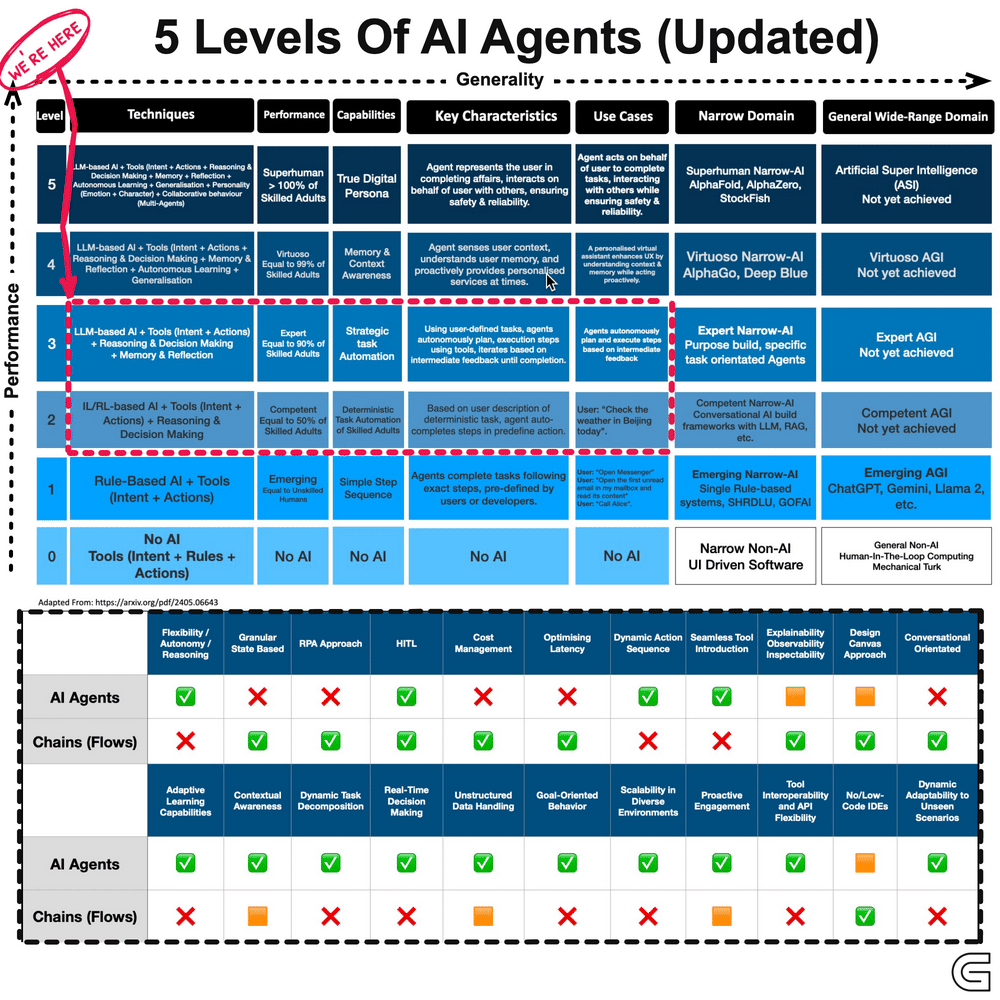
Table of contents
1. Flexibility, Autonomy, Reasoning2. Granular State-Based3. RPA Approach4.Human-in-the-Loop (HITL)5. Managing Cost6. Optimising Latency7. LLM-Generated Action Sequence8. Seamless Tool Integration9. Explainability / Observability / Inspectability10. Design Canvas Approach11. Conversational Oriented12. Adaptive Learning Capabilities13. Contextual Awareness14. Dynamic Task Decomposition15. Real-Time Decision Making16. Unstructured Data Handling17. Goal-Oriented Behaviour18. Scalability in Diverse Environments19. Proactive Engagement20. Tool Interoperability and API Flexibility21. No Low-Code IDEs22. Dynamic Adaptability to Unseen ScenariosCOBUS GREYLINGGet an email whenever Cobus Greyling publishes.1 Comment
Sort: